Perovskite Transparent Modules: Advantages and Global Trends
As a core segment of the third-generation photovoltaic (PV) technology, perovskite transparent modules have become a new focus of global competition in the new energy industry due to their unique product characteristics and broad application prospects. Driven by continuous technological breakthroughs and accelerated industrialization, they not only gradually break the application limitations of traditional PV modules but also lead the global PV industry towards diversification,and green transformation, providing important support for the achievement of the "dual carbon" goals.
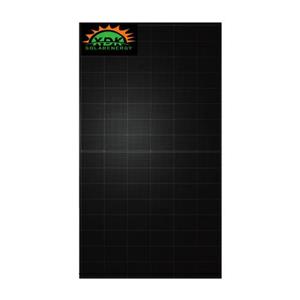
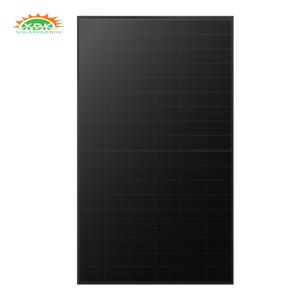
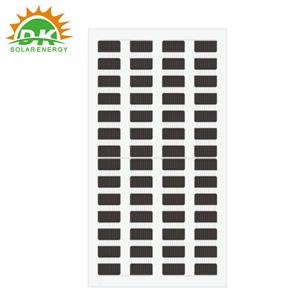
Compared with traditional PV modules and other new-type PV products, perovskite transparent modules have particularly prominent core advantages, combining multiple highlights in performance, cost, and adaptability, which have become the core driving force for their rapid rise. First, synergistic balance between light transmittance and power generation efficiency: it can achieve customizable visible light transmittance of 20%-50%, which can not only meet the basic needs of scenarios such as building lighting and vehicle viewing but also maintain high-efficiency power generation performance.
At present, the full-area energy conversion efficiency of high-quality products has exceeded 20%, and the efficiency under the tandem technology route is constantly refreshing records, truly realizing the dual value of "light transmission and power generation".
Second, convenient preparation and controllable cost: it can be prepared by low-temperature solution processes such as blade coating and inkjet printing, without the high-temperature and complex processes of thousands of degrees Celsius required for traditional crystalline silicon modules, which greatly reduces production energy consumption and manufacturing costs. The cost advantage will be further highlighted after large-scale mass production, breaking the bottleneck of cost reduction and efficiency improvement in the PV industry.
Third, flexible form and wide adaptability: it can be prepared into two series of rigid and flexible products. Rigid modules are suitable for fixed scenarios such as building curtain walls and lighting roofs; flexible modules, with the characteristics of light weight, thinness, and flexibility, can fit curved surfaces and are suitable for emerging scenarios such as vehicle-mounted PV, agricultural greenhouses, and wearable devices.
At the same time, they can effectively generate electricity in indoor low-light environments, further expanding the application boundary. Fourth, outstanding energy-saving and environmental protection properties: it can effectively block more than 99% of ultraviolet rays and part of infrared radiation, reducing indoor energy consumption. Moreover, the production process is green and environmentally friendly, in line with the global concept of green development. At the same time, as a core adaptive product for building-integrated photovoltaic (BIPV), it can realize "buildings as power generators" and help save energy and reduce carbon in the construction field.
From the perspective of global development trends, the perovskite transparent module industry has gradually entered a critical development period of large-scale mass production and multi-scenario application from the technological R&D stage, showing three clear trends and leading the iterative upgrading of the global PV industry.
Trend 1: Continuous technological breakthroughs and expanding performance boundaries. Scientific research institutions and enterprises around the world continue to focus on the two core pain points of efficiency improvement and stability optimization, and constantly break industry bottlenecks through technological innovations such as interface molecular regulation, film layer optimization, and new material R&D. At present, the conversion efficiency of small-area laboratory devices has exceeded 26%, and the efficiency of tandem cells has even exceeded 34%. After technological optimization, the stability can meet the needs of large-scale applications; at the same time, the "perovskite + crystalline silicon" tandem route has become the mainstream direction, which can achieve dual improvement in efficiency and stability, further consolidate its technological advantages, and lay a solid foundation for large-scale applications.
Trend 2: Accelerated industrialization and expanding mass production scale. The world has entered the first year of GW-level production line commissioning, with enterprises in China, the United States, Europe, and other regions intensively deploying. Among them, relying on the advantages of the complete industrial chain of the PV industry, China leads the world in mass production progress, and a number of enterprises have realized the commissioning of GW-level and 100MW-level production lines, promoting the industry to gradually enter the stage of large-scale mass production. According to industry forecasts, the global perovskite solar cell market size has exceeded 335.5 million US dollars in 2024 and is expected to reach 2.74 billion US dollars by 2034, with a compound annual growth rate of 24.1%. Among them, perovskite transparent modules, as a core segment, will usher in explosive growth.
Trend 3: Diversified expansion of application scenarios and continuous release of market demand. With the maturity of technology and cost reduction, the application scenarios of perovskite transparent modules have gradually expanded from the core BIPV field to vehicle-mounted PV, smart agriculture, consumer electronics, satellite aerospace, and other fields. In 2024, BIPV applications accounted for the largest share of the perovskite market, reaching 35.8%, and are expected to grow at a compound annual growth rate of more than 24.5% in the future; in the vehicle-mounted field, they can be integrated into the roof and body of new energy vehicles to realize "charging while driving"; in the agricultural field, they can be applied to greenhouses to achieve a win-win situation of light energy regulation and power generation; in the space field, relying on the characteristics of light weight, thinness, and high efficiency, they have completed on-orbit verification and become an important energy solution for commercial aerospace.
In addition, a global competitive pattern has gradually formed, showing a competitive and cooperative development trend among three major camps: technology-leading startups focus on core technological breakthroughs, traditional PV giants deploy tandem routes to achieve capacity upgrading, and leading enterprises in segmented fields and supply chain enterprises provide supporting support, promoting the continuous improvement of the industrial ecology. At the same time, artificial intelligence deeply empowers the entire R&D and manufacturing process, shortens the R&D cycle, improves production line yield, and becomes the key to breaking the mass production bottleneck of the industry; green and low-carbon has become a consensus in industrial development, and products with low-carbon manufacturing advantages will gain stronger competitiveness in international trade.