BC Solar Cells: Core Advantages & 2026 Industry Development Trends

25-06-2026
  With the rapid iteration of photovoltaic technologies, BC (Back-Contact) cells have emerged as a new-generation high-efficiency solution to replace traditional PERC and conventional N-type batteries. Featuring higher power generation efficiency, enhanced safety, superior low-light and high-temperature performance, and longer lifecycle benefits, BC cells are rapidly being applied across utility-scale power stations, commercial & industrial distributed PV, residential PV, and BIPV scenarios, becoming a recognized upgrading direction and mainstream technology for the future PV industry.

  I. Core Technical Advantages of BC Cells

 1. Zero Front-Side Shading and Industry-Leading Efficiency

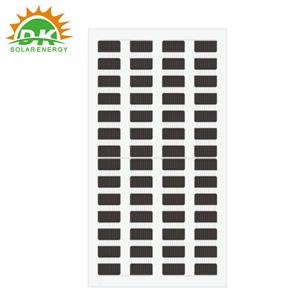
 Traditional solar cells adopt front metal grid lines, which block sunlight and cause significant optical loss. BC cells relocate all positive and negative electrodes to the rear side, achieving a completely grid-free front surface and maximizing light absorption area. This structural innovation greatly improves photoelectric conversion efficiency, with mass production efficiency steadily exceeding 25%. The theoretical efficiency limit of crystalline silicon BC cells reaches 29.4%, representing the highest development potential among current mass-produced PV technologies. Under the same installed capacity, BC modules boost power generation by 6%–8.8% compared with conventional modules, delivering higher returns with the same roof area and installation scale.

 2. Superior Low-Light and High-Temperature Performance for Higher Annual Yield

 PV systems mostly operate under suboptimal conditions, including low-light dawn and dusk periods, cloudy weather, and high-temperature summer environments. BC cells deliver excellent low-light response, starting power generation earlier and maintaining lower attenuation under weak irradiance. Equipped with a superior temperature coefficient, BC cells show far lower power degradation under high temperatures than traditional cells, presenting prominent advantages in hot seasons. Overall, BC PV systems increase annual power generation gains by more than 3%, making them highly suitable for commercial and industrial rooftops, high-temperature regions, offshore PV and other complex application scenarios.

 3. Minimal Hotspot Risk and Greatly Enhanced Operational Safety

 Traditional modules are prone to hotspot formation caused by leaf coverage, dust accumulation and partial shading. Long-term hotspot overheating accelerates module degradation and even triggers potential safety hazards. Without any front-side metal electrodes, BC cells achieve uniform heat distribution under partial shading, effectively reducing hotspot temperature and avoiding overheating degradation, burnout and fire risks. The grid-free and silver-paste-free front surface also strengthens resistance to ultraviolet radiation and moisture erosion. With lower degradation rates over the 25-year service life, BC modules ensure stable power output and safer, more reliable investment returns for PV stations.

4. Huge Cost Reduction Potential and Optimized Long-Term Cost Performance

Silver paste accounts for a major proportion of PV cell production costs. The unique back-contact structure of BC cells significantly reduces silver consumption and improves material utilization. It is inherently compatible with advanced cost-saving processes including silver-free copper plating and wafer thinning. Driven by large-scale production and continuous technological optimization, the manufacturing cost of BC cells keeps declining, gradually matching and even surpassing the cost performance of traditional cells. In the long run, BC technology achieves high efficiency at low cost, making it an optimal choice for long-term PV station investment.

5. Ultra-Sleek Appearance for High-End PV Scenarios

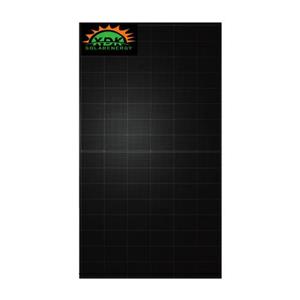
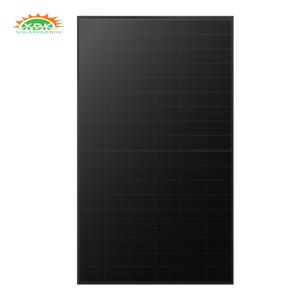
BC modules feature a fully black, smooth and grid-free surface, realizing an integrated and aesthetic appearance that solves the messy visual defects of traditional PV products. They are perfectly applicable to high-end scenarios such as building-integrated photovoltaics (BIPV), premium residential rooftops, balcony PV systems and landscape-oriented industrial parks. Balancing power generation functionality and architectural aesthetics, BC modules deliver prominent premium value for high-end projects.


II. Latest Development Trends of BC Cell Industry in 2026

1. Technological Iteration Turning Point: BC Becomes the Mainstream Upgrading Direction

Traditional PV cell technologies have approached their theoretical efficiency limits, with marginal efficiency improvements becoming increasingly difficult and costly. In contrast, BC cells retain abundant room for performance upgrading, possessing the highest efficiency ceiling and technological potential among mainstream crystalline silicon solutions. In 2026, the global PV industry is comprehensively shifting its technological upgrading focus to BC technology. With continuous capacity expansion across the industrial chain, BC cells have officially transitioned from a high-end niche technology to a large-scale commercial mainstream solution.

2. Mature Mass Production Technology with Yield and Stability Comparable to Traditional Cells

After years of process polishing and technical iteration, current BC cell mass production yield, operational stability and batch consistency have fully met large-scale commercial standards, completely eliminating the early pain points of complex processes and unstable performance. Benefiting from localized equipment production, simplified manufacturing procedures and upgraded automation levels, the production cost of BC cells continues to drop, rapidly narrowing the price gap with traditional products and accelerating large-scale commercial adoption.

3. Full-Scenario Penetration and Universal PV Application Adaptability

Breaking the limitations of high-end niche scenarios, BC technology has achieved full coverage of all PV application fields. Utility-scale ground power stations reduce LCOE (levelized cost of energy) and save investment in land, brackets and inverters through high power generation efficiency; commercial and industrial PV systems improve annual power generation revenue with excellent high-temperature and low-light performance; residential and BIPV projects achieve differentiated upgrading via superior appearance and long-term stability. High-efficiency BC modules are set to become the standard configuration for newly built PV projects.

4. In-Depth Technological Integration with Broad Long-Term Development Prospects

BC technology features strong compatibility and can be deeply integrated with wafer thinning, zero-grid processes, copper plating and tandem cell technologies to continuously unlock potential for efficiency improvement and cost reduction. In the long term, BC-perovskite tandem cells will break the efficiency bottleneck of traditional crystalline silicon, serving as the core solution for next-generation ultra-high-efficiency PV systems. With sustainable technological iteration and long-term value retention, BC technology avoids rapid elimination and boasts durable industry competitiveness.


Compared with traditional PV modules, BC back-contact cells deliver distinct core values: higher power generation, enhanced safety, lower degradation, longer service stability, wider scenario adaptability and better long-term cost performance. As the PV industry shifts from price-oriented homogenized competition to high-efficiency, high-quality and full-lifecycle revenue-oriented competition, the adoption of high-efficiency BC modules effectively reduces LCOE, improves investment return rates, and ensures stable long-term benefits for PV station projects.

Get the latest price? We'll respond as soon as possible(within 12 hours)

Privacy policy