Both Aesthetics and Performance! All-Black Solar Modules Lead the PV Market with "Black Technology"
Since 2026, the global photovoltaic (PV) industry has been accelerating its transformation towards "high efficiency, aesthetics, and diversification". With its dual advantages of appearance and performance, all-black solar modules have gradually broken the market pattern of traditional modules, becoming the core choice for residential, distributed, and Building-Integrated Photovoltaics (BIPV) scenarios. The industry penetration rate is constantly rising, boasting broad development prospects.
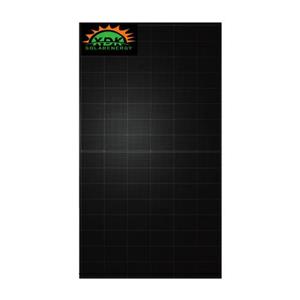
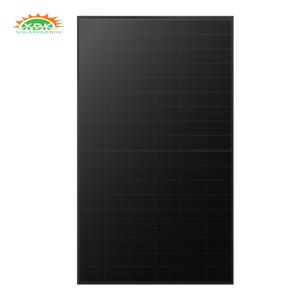
The rapid rise of all-black solar modules stems from their comprehensive advantages over traditional PV modules, which accurately meet the dual needs of end-users for aesthetics and practicality, forming unique market competitiveness. In terms of appearance, all-black modules adopt an integrated all-black design of cells, frames, and backsheets. Through sophisticated material selection and process optimization, they have solved the color difference problem of traditional "pseudo-all-black" modules. Under different light angles, the modules present a uniform, deep, and pure black texture without any visual breakpoints, which can be seamlessly integrated into the roofs and curtain walls of villas, high-end residential buildings, and commercial buildings. This completely changes the "industrial feel" of traditional PV modules, realizes the perfect integration of green energy and architectural aesthetics, and becomes the preferred product for high-end scenarios with a significant aesthetic premium over conventional modules.
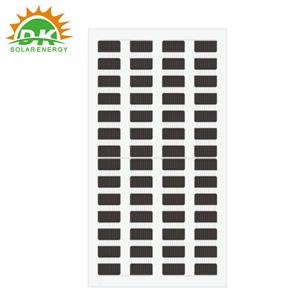
In terms of performance, all-black modules rely on advanced technologies such as Back Contact (BC), placing all electrodes on the back of the cells, eliminating front grid line shading, and greatly increasing the light-receiving area and light transmittance. Combined with the upgrading of N-type technology, the mass production conversion efficiency generally reaches above 23.5%~25%, with some products exceeding 25.2% in maximum efficiency and power ranging from 440Wp to 720Wp. The annual power generation is 3%-5% higher than that of ordinary modules. At the same time, most all-black modules adopt double-glass structure and POE/EPE film packaging, featuring excellent anti-PID, anti-moisture, and anti-corrosion performance. The welding strength is significantly higher than that of traditional modules, which can effectively resist the erosion of complex environments such as high temperature, high humidity, and coastal salt and alkali, reduce efficiency loss caused by dust shading, and optimize the temperature coefficient to about -0.29%/℃, showing outstanding power generation stability in high-temperature areas. In addition, all-black modules are generally equipped with a 25-year linear power guarantee, with a first-year attenuation of less than 2%, ensuring higher long-term operation reliability and a service life far exceeding the industry average.
In terms of scenario adaptability, the advantages of all-black modules are more prominent. To meet the dual needs of European and American residential markets for roof aesthetics and low-carbon compliance, all-black modules not only meet the aesthetic standards of local high-end residential buildings but also have passed multiple authoritative certifications. Their carbon footprint meets the strict low-carbon standards of the European Union, which can effectively avoid carbon tariff barriers and become a rigid demand product in the European distributed market. In the domestic market, all-black modules are extending from high-end villas to emerging scenarios such as balcony PV and industrial and commercial roofs. Especially suitable for the "small and beautiful" demand of balcony PV, they have no light pollution and do not disturb residents with their matte low-reflection design, further expanding the application boundary. At the same time, in the field of BIPV, all-black modules can be used as building components to seamlessly integrate with roofs and curtain walls, promoting the upgrading of PV buildings from "functional addition" to "aesthetic integration", and the market demand is constantly being released.
At the market level, driven by multiple factors such as the accelerated global energy transition, energy security anxiety caused by geopolitical conflicts, and policy support from various countries, the all-black module market has witnessed explosive growth. The demand for energy security has driven the upsurge of distributed PV installation in Europe. With its aesthetic and compliance advantages, all-black modules have become the core choice in the local market, with a market share of over 30% in distributed scenarios in some European countries. The North American market also shows a rapid growth trend. With its invisible design and integrated installation advantages, all-black modules are in line with the upsurge of high-end residential reconstruction, and the demand is constantly rising.
Policy orientation has further injected momentum into the development of all-black modules. The EU's "Net Zero Industry Act" has officially entered the full implementation stage, requiring member states to allocate 30% of the bidding capacity of renewable energy projects to projects that meet standards such as supply chain resilience and sustainability contributions. The low-carbon attributes and compliance advantages of all-black modules make them more competitive in the market; European countries such as Germany, France, and Italy have introduced tax reductions, subsidies, and other policies to stimulate the demand for residential PV, further driving the consumption of all-black modules; domestically, the pilot projects of BIPV and balcony PV are being accelerated, opening up a broad application space for all-black modules.
Looking ahead, the development prospect of all-black modules remains promising, and the industry will usher in dual opportunities of technological iteration and market expansion. At the technical level, the in-depth integration of BC technology with N-type technologies such as TOPCon and HJT will become the mainstream. The R&D of new products such as perovskite tandem all-black modules and flexible all-black modules is accelerating, and it is expected to achieve GW-level mass production before 2030, further improving efficiency and reducing costs. At the market level, with the continuous growth of global PV installation demand, especially the rapid expansion of the residential and distributed markets, the penetration rate of all-black modules will continue to rise. According to industry forecasts, the global market size of all-black modules will maintain a high compound annual growth rate in the next few years, gradually transforming from a high-end product to a mass rigid demand.